
From September 20 to 30, Vice President Ren Zhongqi, Member of the University Party Committee Standing Committee, led a delegation on a visit to Africa and Europe, signing four cooperation agreements and marking the first university-level visit by Beijing University of Chemical Technology to Morocco. This visit further expanded the university’s network of high-level institutional partnerships. The delegation visited universities and research institutions including Mohammed V University of Rabat and Hassan II University of Casablanca in Morocco, the University of Santiago de Compostela (USC), the IMDEA Materials Institute in Madrid, and the Universidad Politécnica de Madrid (UPM) in Spain, as well as KU Leuven and Ghent University in Belgium.
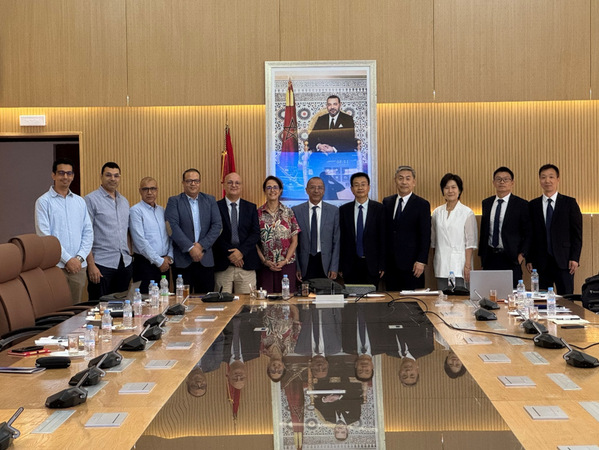
On September 21, the delegation visited Mohammed V University of Rabat in Morocco. The university is Morocco’s top public research university, and its affiliated Mohammadia School of Engineers is a renowned elite engineering institution in North Africa. The delegation held discussions with the university’s Vice President, Ismail Kassou, and heads of relevant departments and faculties. Both sides presented overviews of their institutions, highlighting academic strengths and key research areas. The two sides held in-depth discussions on joint student training programs, collaborative scientific research and innovation, and faculty exchange programs. Both parties expressed their commitment to further deepening practical cooperation in areas including joint dual-degree programs, the establishment of joint research laboratories, collaborative research projects, and joint publication of academic findings. On behalf of the university, Ren Zhongqi signed a Memorandum of Understanding (MOU) on inter-university cooperation with the host institution.
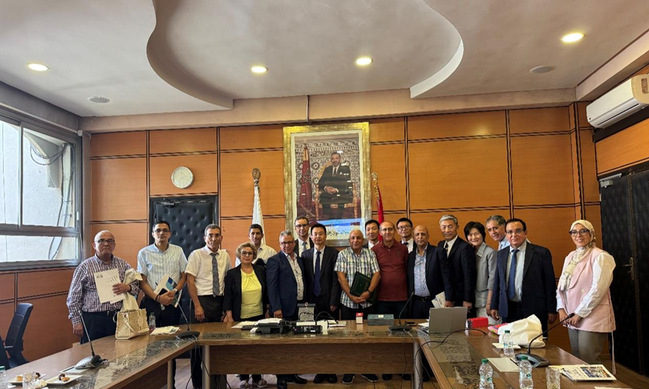
On September 22, the delegation visited Hassan II University of Casablanca in Morocco. As Morocco’s largest public comprehensive university, it ranks among the country’s top institutions in terms of overall strength, offers a comprehensive range of academic disciplines, and wields significant academic influence in North Africa. The delegation held discussions with Mustapha Lkhider, Vice President of the university, and heads of relevant faculties. Both sides expressed their intention to focus on collaboration in key cutting-edge fields such as biomass conversion, renewable energy, ecological and environmental governance, advanced materials, and artificial intelligence. At the same time, drawing on the China-Morocco bilateral cooperation mechanism, they agreed to jointly apply for intergovernmental scientific research cooperation projects, promote faculty exchanges, steadily advance joint PhD programs, and further expand substantive cooperation across multiple levels and in a wide range of fields. Representing the university, Ren Zhongqi formally signed an MOU with the host institution.
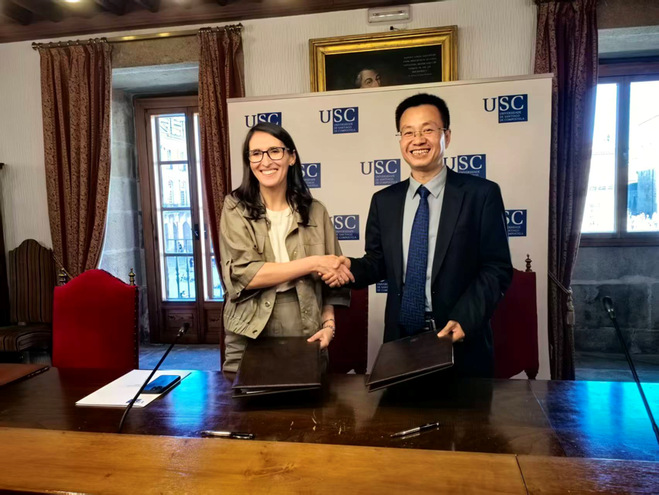
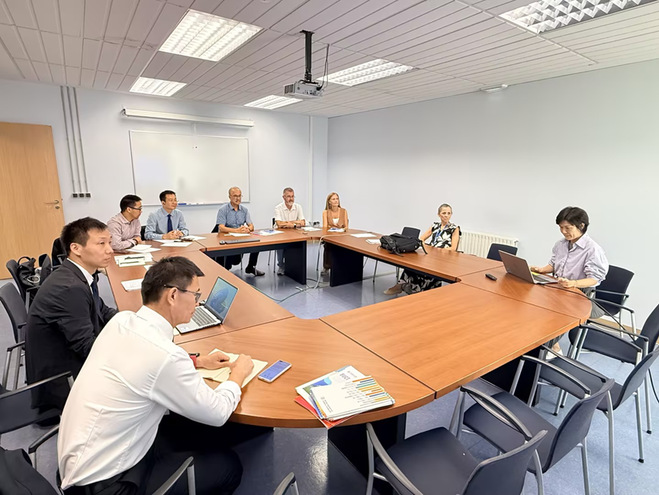
On September 24, the delegation visited USC. USC is a long-established public research university in Spain and the leading institution in the Galicia region, with strong programs in biological and environmental chemical engineering. During the subsequent meeting, both sides presented overviews of their respective universities and highlighted their academic strengths. They discussed the establishment of dual-degree master’s programs and undergraduate collaboration initiatives, and expressed their commitment to leveraging the core research advantages of USC’s National Centers of Excellence to deeply integrate talent development with research platforms, thereby creating distinctive program features. Following the discussions, Vice President Ren Zhongqi and USC Rector Rosa M. Crujeiras Casais signed a student exchange agreement. That morning, the delegation also visited the Center for Cross-disciplinary Research in Environmental Technologies (CRETUS) in Galicia and held discussions with Professor Juan Manuel Lema Rodicio and representatives of the relevant research teams.
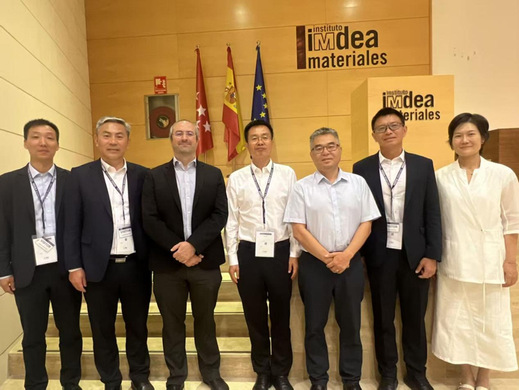
On the morning of September 25, the delegation visited the IMDEA Materials Institute in Madrid and held discussions with Damien Tourret, the institute’s Deputy Director, and Professor Wang Deyi, Member of the Academia Europaea. The two sides engaged in in-depth discussions on the favorable environment and complementary strengths for Sino-Spanish scientific research cooperation and expressed their commitment to actively exploring ways to broaden channels of cooperation by leveraging their respective resources and existing collaborative foundations.
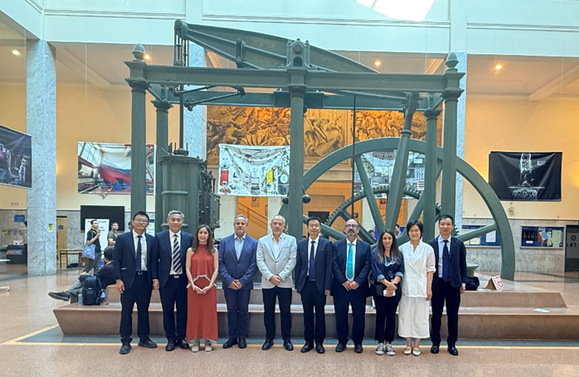
On the afternoon of September 25, the delegation visited UPM. The university ranks first among Spain’s polytechnic universities in terms of overall strength and enjoys an excellent reputation in the field of engineering education in Europe. The delegation held discussions with Xavier Ferre, UPM’s representative for Asia-Pacific affairs, as well as heads of relevant faculties and departments and faculty representatives. Both sides provided comprehensive overviews of their respective institutional characteristics, strengths in specific academic disciplines, and internationalization strategies, and engaged in in-depth discussions on potential areas of cooperation, including academic exchange, scientific research and innovation, and student mobility.
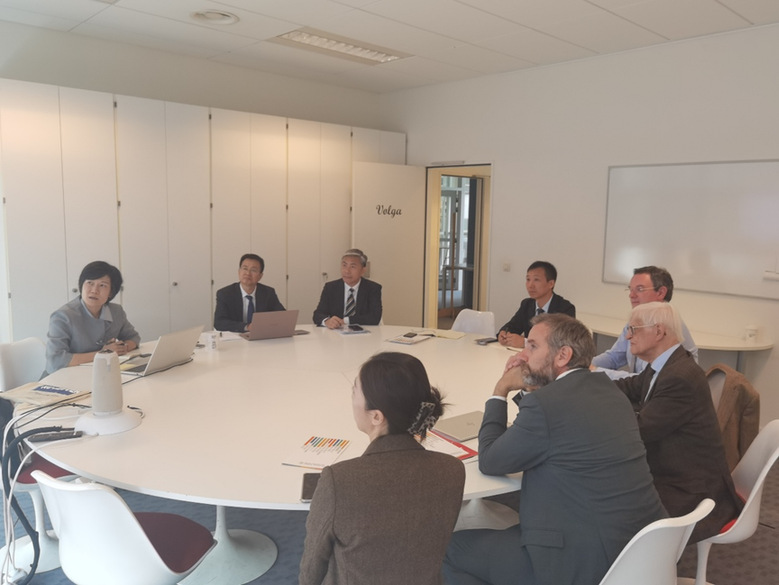
On the morning of September 28, the delegation visited KU Leuven in Belgium. As Belgium’s top-ranked research university, KU Leuven is also one of Europe’s oldest and most prestigious institutions of higher education. Wim Dewulf, Dean of the Faculty of Industrial Engineering; Professor Jan Baeyens from the Department of Chemical and Environmental Engineering; and Professor Raf Dewil, Editor-in-Chief of the Journal of Environmental Management, participated in the exchange. The two sides held discussions on topics such as joint talent development, dual-degree programs, reciprocal visits of faculty and students, and collaborative innovation in research. They also explored deeper cooperation in areas such as student exchange programs and Sino-foreign joint education initiatives.
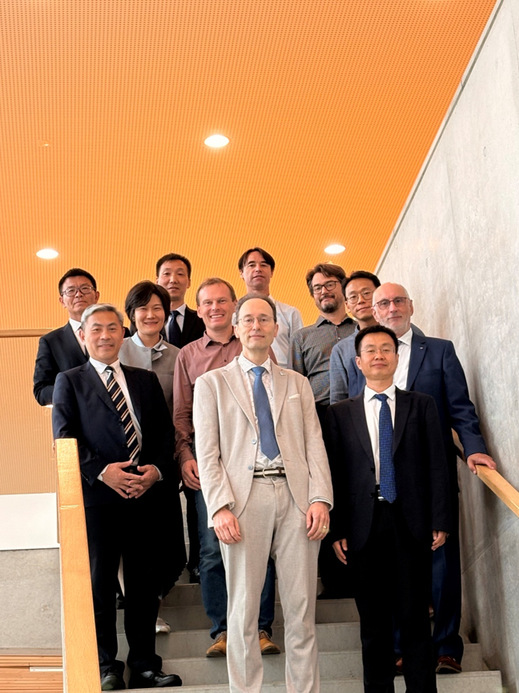
On the afternoon of September 28, the delegation visited Ghent University in Belgium. The university ranks second in Belgium in terms of overall strength and boasts strong programs in disciplines such as chemical engineering and materials science. The delegation held discussions with Filip De Turck, Dean of the Faculty of Engineering and Architecture, as well as heads of relevant departments and faculty representatives. Both sides thoroughly exchanged views on practical areas of cooperation, including joint PhD programs, student exchanges, and the establishment of scientific research collaborations. An MOU signing ceremony was held during the meeting, where Vice President Ren Zhongqi, Dean Filip De Turck, and Professor Luc Taerwe, Director of the East Asia Cooperation Platform, jointly signed the MOU. Following the meeting, Professor Ouyang Yi of Ghent University’sDepartment of Materials, Textiles and Chemical Engineering led the delegation on a tour of relevant laboratories.
The delegation also included Zhao Chun, Director of the BUCT Finance Office; Li Yan, Deputy Dean of the Institute of Advanced Technology and Equipment; Xu Shuai, Director of the University Science Park Management Office; and Yu Yue, Deputy Dean of the School of International Education.