
To actively implement the national initiative of promoting high-quality Belt and Road cooperation and advancing China-Europe collaboration, strengthen institutional partnerships with universities and research organizations in Austria, Italy, and Switzerland, and support the university’s internationalization strategy and major-country diplomacy efforts, Vice President Wang Feng led a delegation on a visit to the Center for Bioenergy and Sustainable Technologies, Vienna University of Technology, the United Nations Institute for Training and Research, EPFL (Swiss Federal Institute of Technology Lausanne), the University of Padua, the University of Genoa, and Sapienza University of Rome from June 24 to July 3. The delegation also visited the Embassy of the People’s Republic of China in Italy. During the visit, the delegation engaged in extensive discussions on substantive cooperation in areas such as joint student training, faculty research collaboration, jointly established Sino-foreign educational programs, and joint laboratory development, achieving a series of productive outcomes.
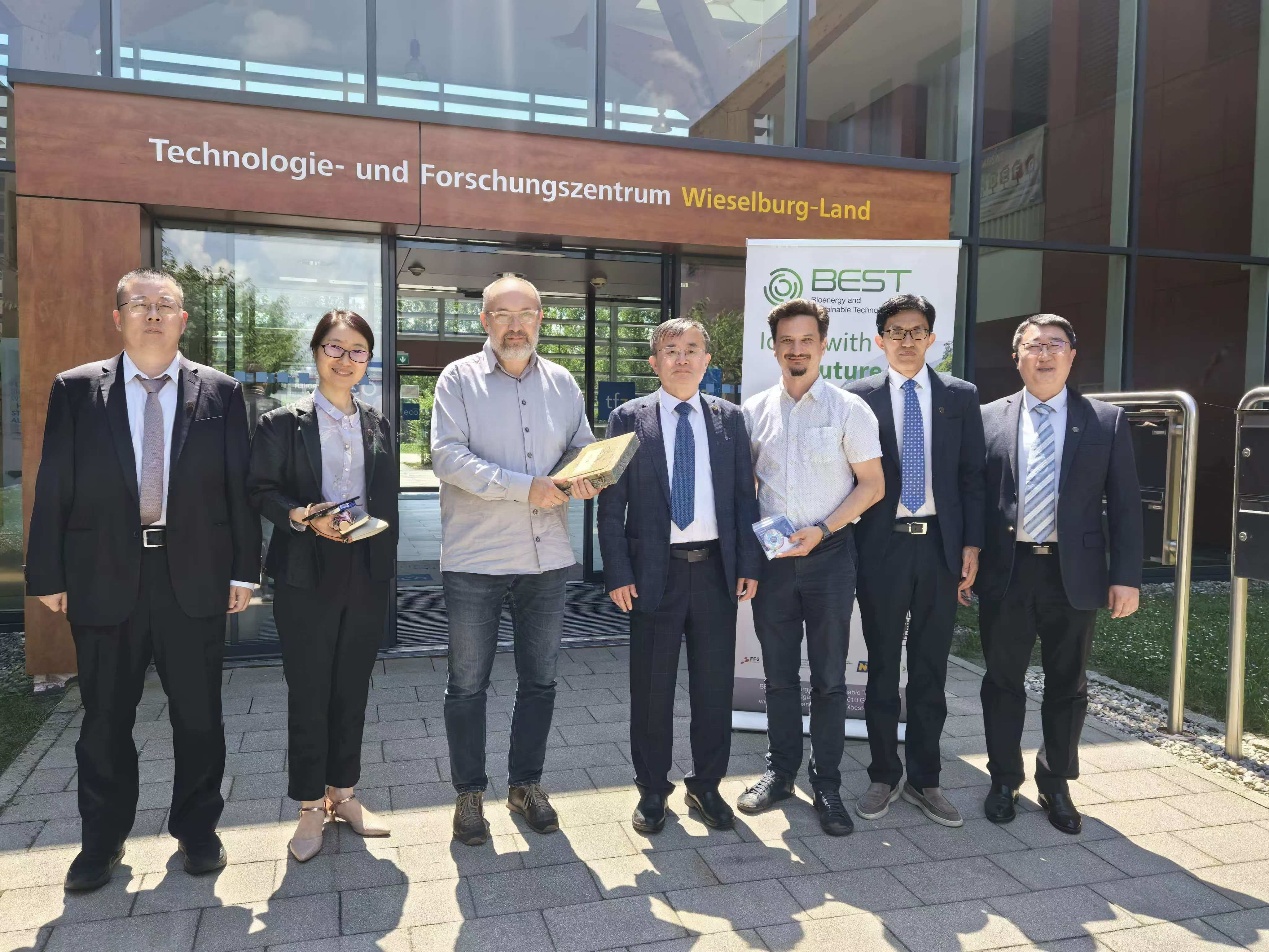
Delegation Visits the Center for Bioenergy and Sustainable Technologies (Austria)
At the Center for Bioenergy and Sustainable Technologies, the delegation held in-depth discussions with Center Director Walter Haslinger and Professor Manuel Schwabl. The two sides reached broad consensus on further advancing the development of the Sino-Austrian Joint Research Center for Bioenergy, promoting student exchanges and joint training programs, and jointly applying for international collaborative research projects. The delegation also toured the center’s laboratories and pilot-scale engineering facilities.
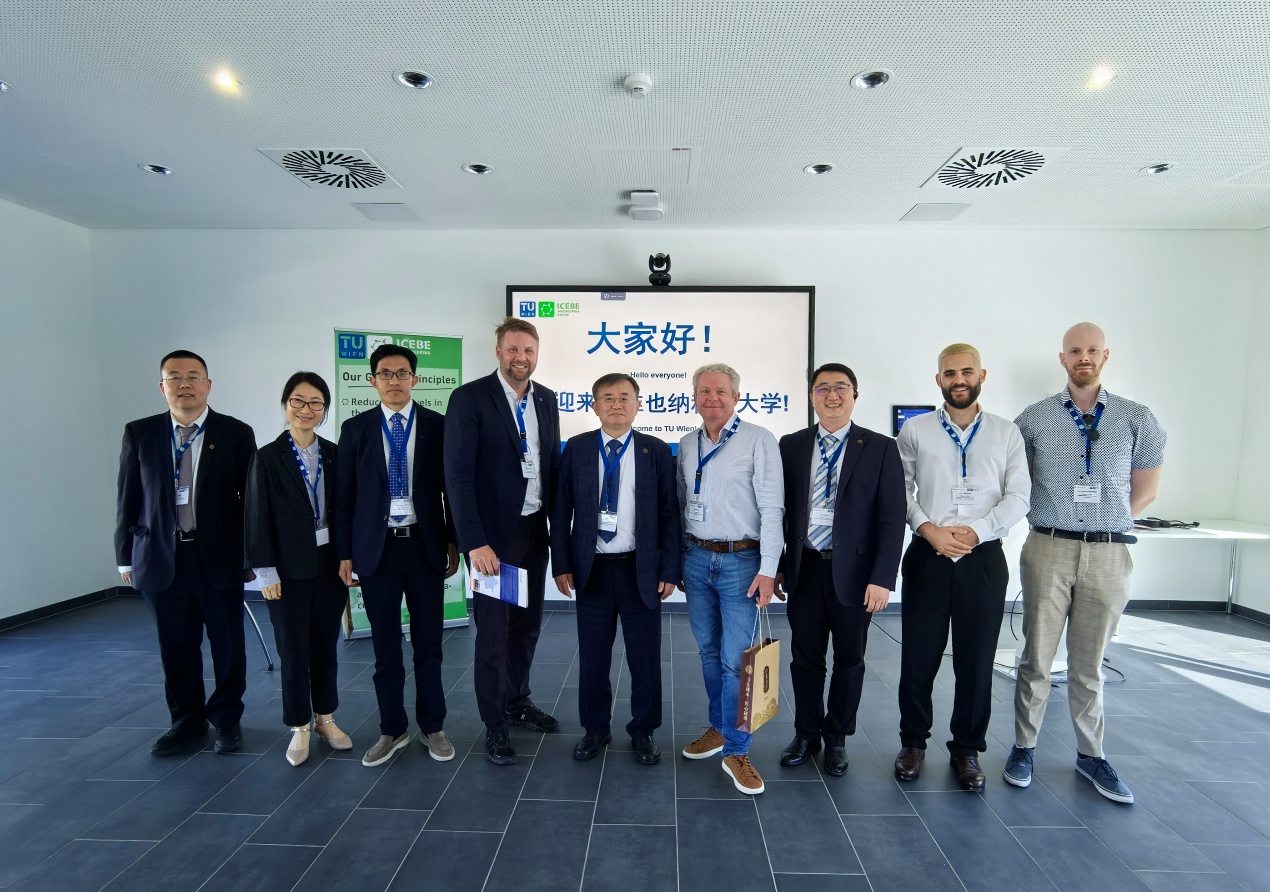
Delegation Visits Vienna University of Technology (Austria)
At Vienna University of Technology, the delegation held discussions with Kyle Schmude, Head of the International Reception and Exchange Center; Robert L. Mach, Director of the Institute of Chemical, Environmental and Bioscience Engineering; Stefan Muller, Head of the Research Center for Fuel and Energy Systems Engineering; and other relevant department representatives. The two sides introduced their respective research priorities and academic strengths in areas including chemical engineering, environmental engineering, and bioscience engineering, while exchanging views on advancing cooperation in student exchanges, faculty visits, jointly organized Sino-foreign educational programs, and the establishment of a joint research center. The discussions resulted in broad consensus across multiple areas. During the visit, the delegation toured the university’s pilot laboratory for clean energy conversion.
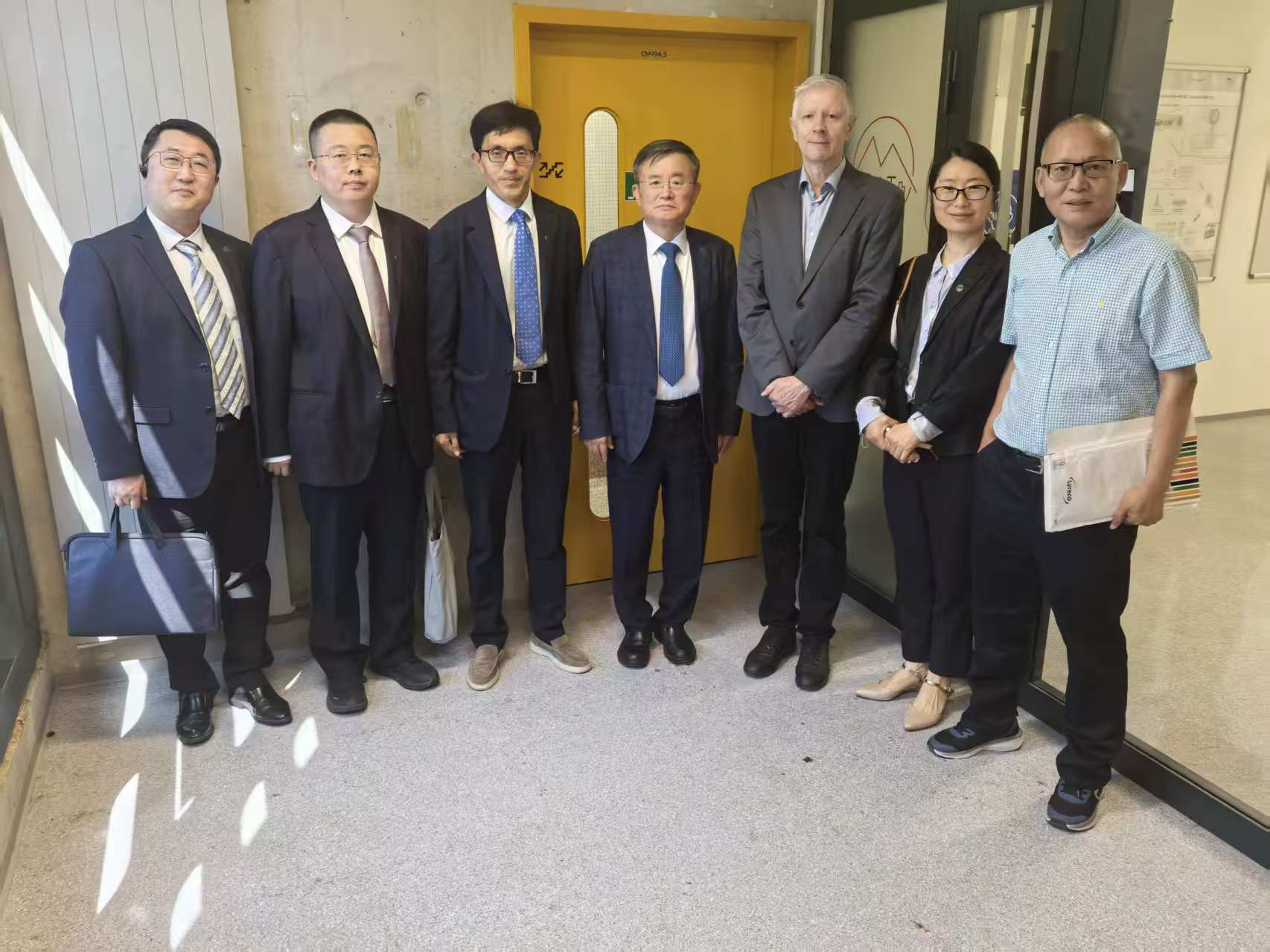
Delegation Visits EPFL (Switzerland)
At EPFL, the delegation held discussions with Paul Dyson, Dean of the School of Basic Sciences, and Professor Feizhao Fei, Principal Scientist at the university. Paul Dyson provided a comprehensive overview of the school’s disciplinary structure and major research achievements, while Vice President Wang Feng introduced BUCT’s leading disciplines and academic strengths. The two sides engaged in in-depth discussions on joint master’s and doctoral training programs and research collaboration. During the visit, the delegation toured EPFL’s catalytic research laboratory platforms and gained valuable insights into the standards, management mechanisms, and operational models of public research infrastructure.
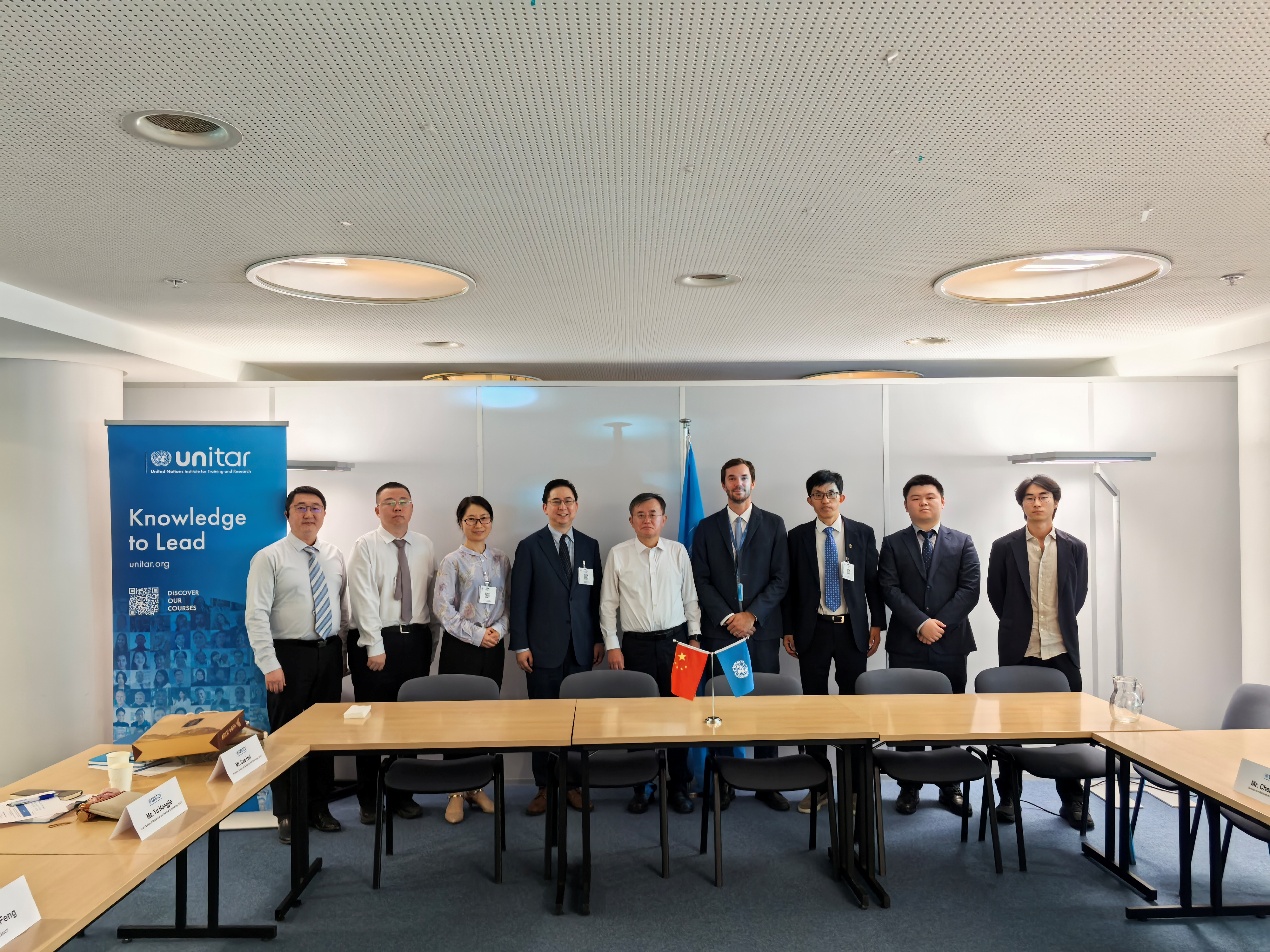
Delegation Visits the United Nations Institute for Training and Research (UNITAR)
At UNITAR, the delegation held discussions with Julian Catetti, Training Programme Officer of the Multilateral Diplomacy Division, and interns. The delegation gained insights into UNITAR’s core functions and the unique features of its training programs, and explored opportunities for sending students to participate in specialized training programs of mutual interest, reaching a preliminary cooperation intention. During the visit, the delegation toured the United Nations Office at Geneva and observed a student simulation training session in progress.
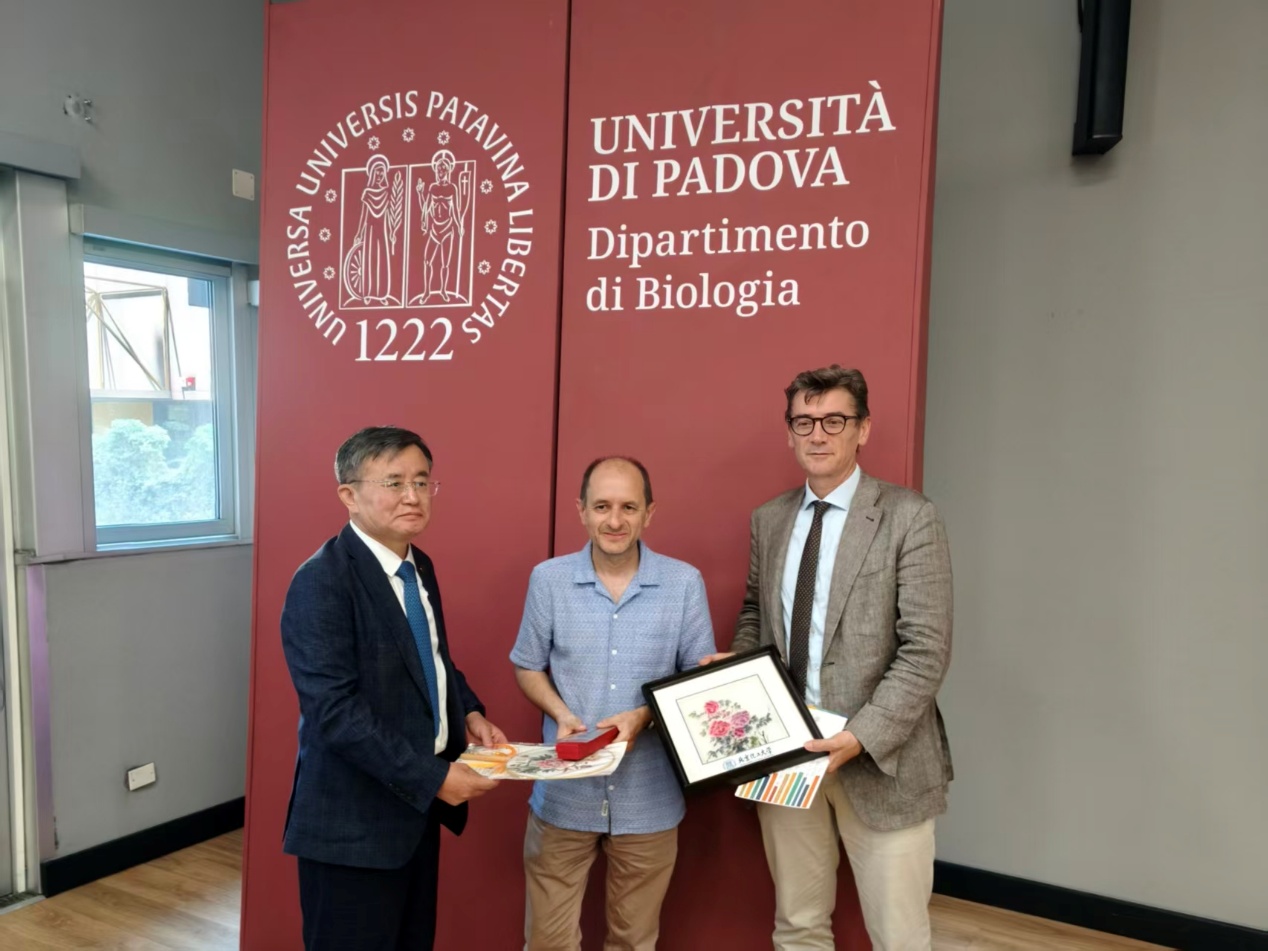
Delegation Visits the University of Padua (Italy)
At the University of Padua, the delegation held in-depth discussions with Professor Paolo Tarolli, International Affairs Advisor, and Professor Luigi Bubacco, Head of the Department of Biomedical Engineering. The two sides exchanged views on their respective institutional histories, disciplinary advantages, and internationalization strategies, reaching preliminary consensus on deepening short-term student exchanges and joint training, establishing joint research platforms, and developing Sino-foreign cooperative education programs. During the visit, the delegation toured university laboratories and gained a better understanding of the academic and living conditions of Chinese students enrolled at the university.
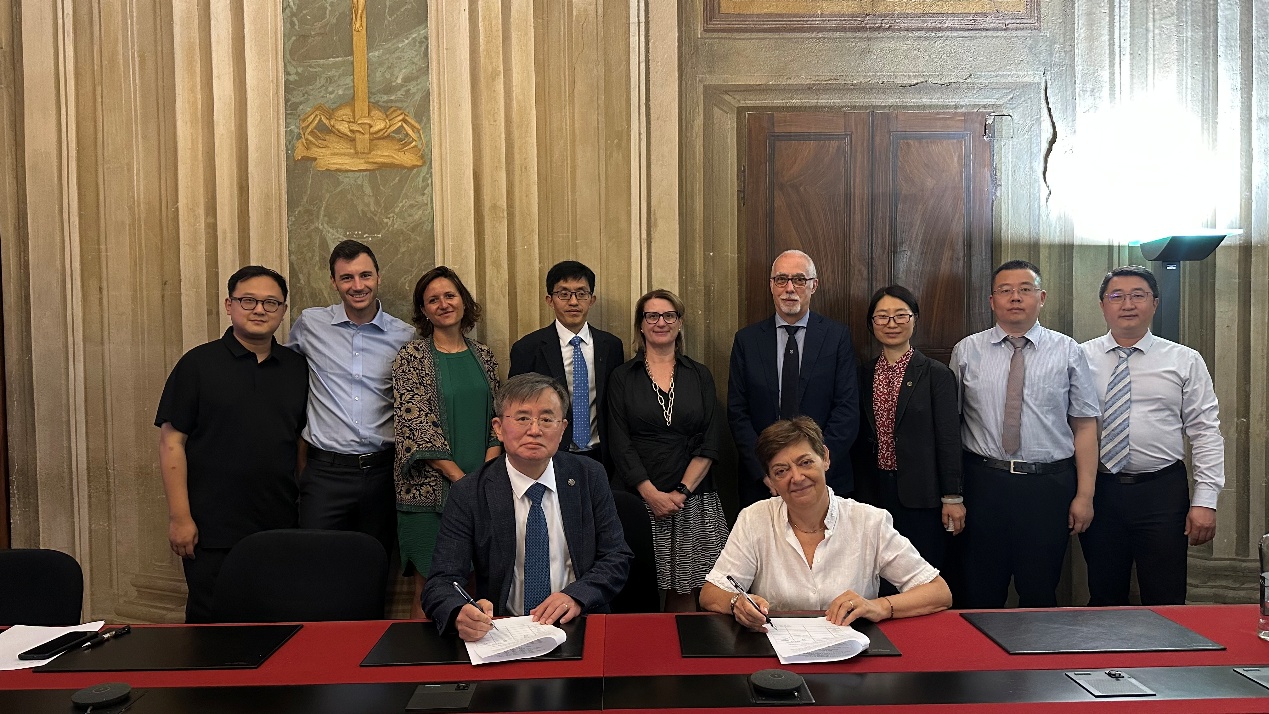
Delegation Visits the University of Genoa (Italy)
At the University of Genoa, the delegation held discussions with Vice Rector Paola Renata Dameri, Vice Rector Laura Gaggero, Niccolò Casiddu, Head of the Industrial Design cooperation program, and faculty representatives from chemistry, materials science, and pharmaceutical engineering. Both sides recognized the outstanding achievements of the Industrial Design joint educational program since its establishment and agreed to expand student enrollment while continuing to develop a high-quality Sino-foreign cooperative education program. The two sides also held in-depth discussions on joint master’s and doctoral programs in Industrial Design, as well as enhanced research collaboration in industrial design, materials science, chemical engineering, and related disciplines. During the discussions, Vice President Wang Feng and Paola Renata Dameri signed the Joint Management Committee resolution and a supplementary agreement to the existing Sino-foreign cooperative education agreement.
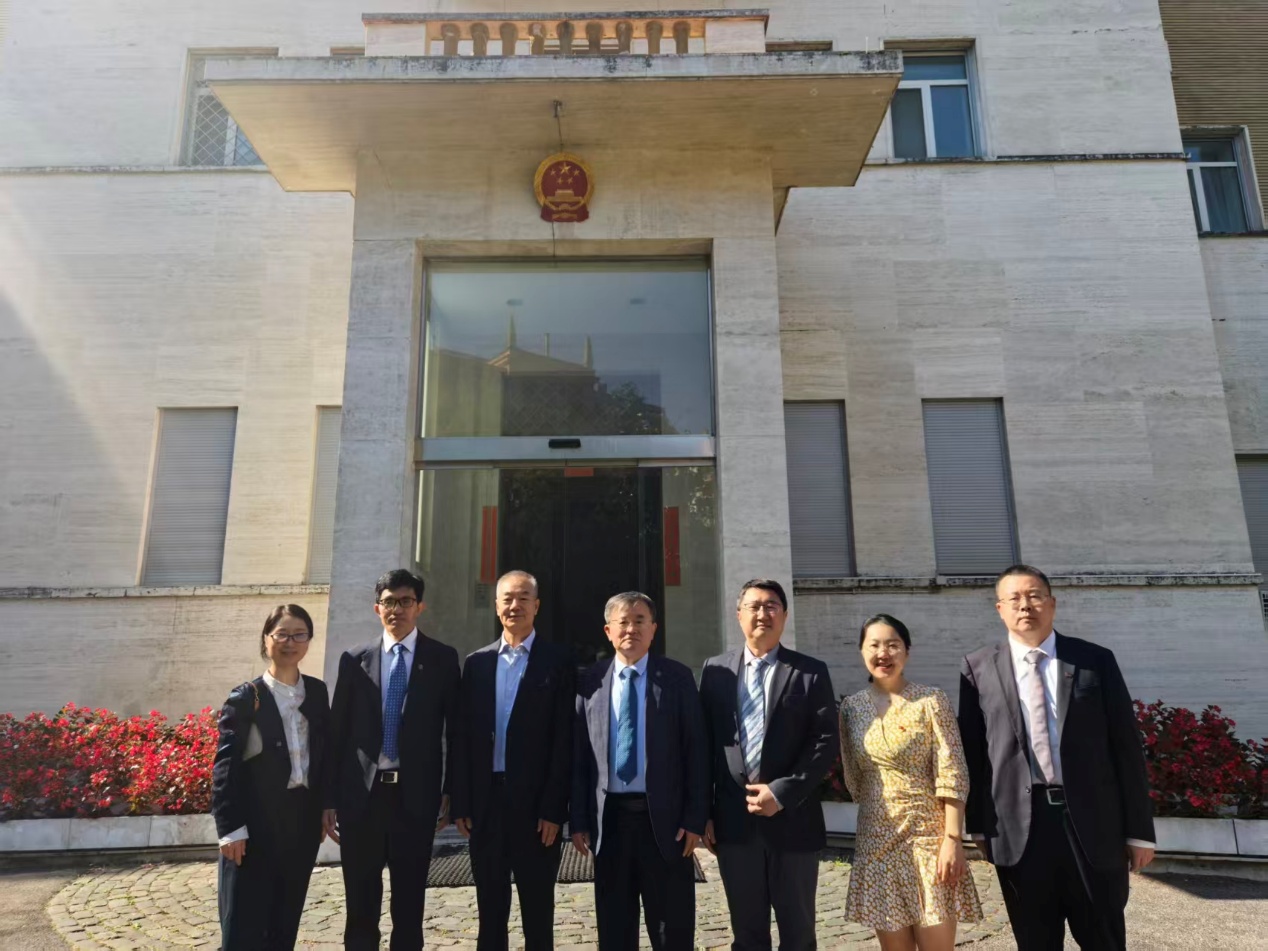
Delegation Visits the Embassy of the People’s Republic of China in Italy
At the Embassy of the People’s Republic of China in Italy, Counselor Yu Xingguo received the delegation. Vice President Wang Feng briefed the Counselor on the background and objectives of the visit, highlighting BUCT’s progress and achievements in cooperation with Italian institutions, including the University of Genoa and the University of Padua, in areas such as joint educational programs, student training, and faculty research collaboration. He expressed the hope that, with the continued guidance and support of the Embassy, BUCT would further deepen and expand cooperation with Italian universities and establish a high-quality model for China-Italy collaboration in education and science and technology. Counselor Yu Xingguo fully affirmed the achievements of BUCT’s cooperation with Italian institutions and encouraged the university to actively implement the Ministry of Education’s initiatives for strengthening educational development and expanding international exchanges, continue leveraging its disciplinary strengths, broaden cooperation fields, and enrich cultural exchange activities to inject new vitality into China-Italy friendship.
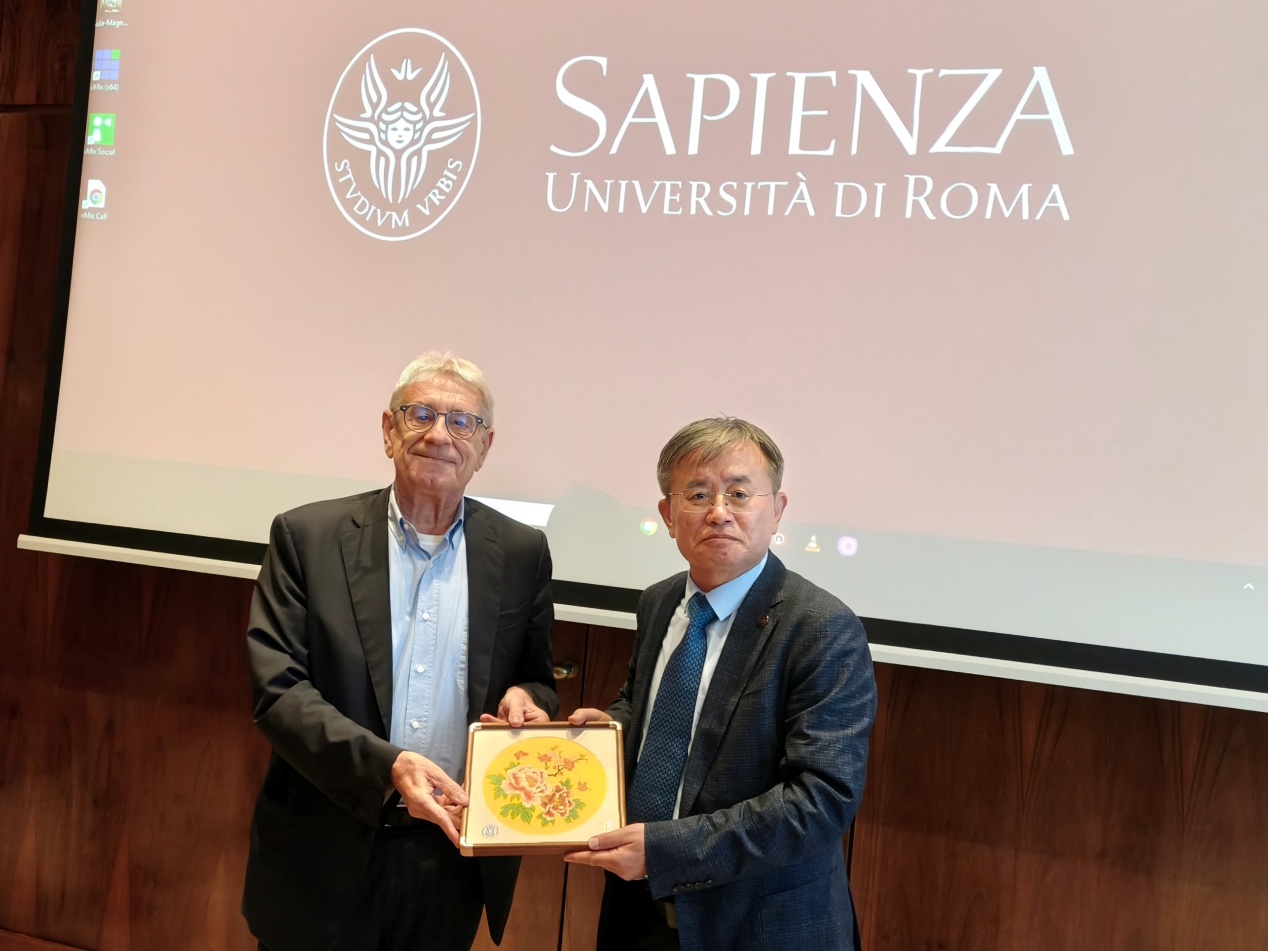
Delegation Visits Sapienza University of Rome (Italy)
At Sapienza University of Rome, the delegation held discussions with Oliviero Diliberto, Plenipotentiary Representative for China Affairs; Giovanni Maria Vianello, Head of the International Relations and Agreements Office; Gabriele Favero, Dean of the Faculty of Mathematical, Physical and Natural Sciences; and Carlo D’Ippoliti, Deputy Dean of the Faculty of Information Engineering, Informatics and Statistics. The two sides exchanged views on their respective institutional histories, disciplinary strengths, and internationalization strategies, and conducted in-depth discussions on potential cooperation in areas including chemical engineering, materials science, biosciences, mechanical engineering, and information sciences. Preliminary consensus was reached on further strengthening joint student training, collaborative research, and Sino-foreign cooperative education programs.
This visit further strengthened BUCT’s partnerships with leading European universities and research institutions, expanded its global cooperation network, and established a strong foundation for continued international collaboration in joint student training, joint research centers, and Sino-foreign cooperative education programs with high-caliber partner institutions.
The delegation consisted of Yu Hongjie, Party Secretary of the College of Mechanical and Electrical Engineering; Feng He, Party Secretary of the College of Information Science and Technology; Cao Hui, Party Secretary of the College of Life Science and Technology; and Liu Guangqing, Executive Director of the Belt and Road Global Cooperation Research Institute.